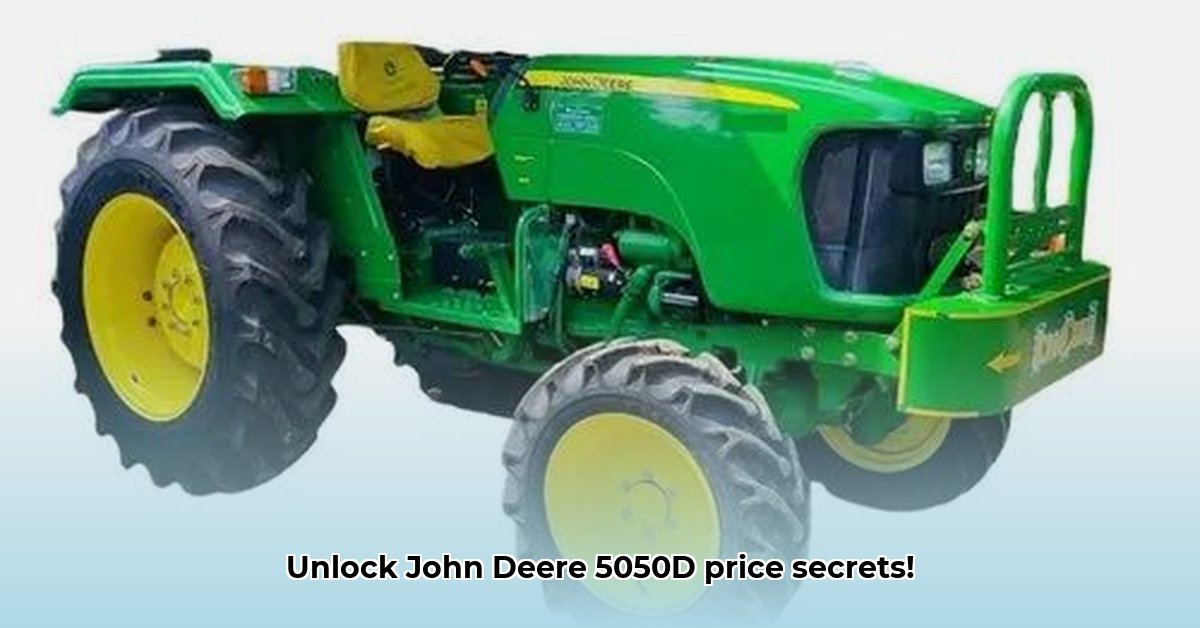
John Deere 5050D Price: A Comprehensive Guide for Sustainable Farming
Considering a John Deere 5050D tractor? Understanding its price is crucial, but it's only one piece of the puzzle. This detailed guide explores the tractor's value proposition, total cost of ownership, sustainability aspects, and provides a step-by-step buying process to help you make an informed decision. We'll balance the initial investment with long-term cost savings and environmental impact, ensuring you're equipped to build a thriving, sustainable farm operation. Learn more about where John Deere tractors are manufactured by visiting this helpful resource: John Deere manufacturing.
More Than Just a Price Tag: The 5050D's Value Proposition
The John Deere 5050D is more than just a tractor; it’s a versatile workhorse designed to streamline farm operations. Its ability to handle diverse tasks—from plowing to seeding—reduces the need for multiple specialized machines, resulting in significant upfront cost savings. Think of it as acquiring a versatile multi-tool instead of a cumbersome collection of individual tools—efficient and cost-effective. This versatility translates directly into increased productivity and potential long-term cost savings. But is that really the case for your operation?
This tractor's efficiency extends beyond its multiple applications. Its advanced transmission and available tire options contribute to improved fuel economy, a detail many farmers highlight as a substantial advantage over older models. While the exact fuel savings vary based on usage, the potential for significant cost reductions and a reduced carbon footprint is undeniable. How much will fuel savings actually impact your bottom line?
Beyond the Sticker Price: The Total Cost of Ownership
The true cost of a John Deere 5050D extends beyond the initial purchase price. Ongoing expenses, including regular servicing, potential repairs, and the cost of replacement parts, need careful consideration. These costs fluctuate based on usage intensity and maintenance diligence.
Planning ahead is crucial. Creating a detailed budget encompassing estimated maintenance costs for the next 5-10 years might seem tedious, but it provides vital financial clarity. Also factor potential downtime from major repairs, which can significantly impact productivity and profitability. This comprehensive approach to cost analysis is essential for a wise investment. Are you prepared to factor these elements into your budgeting process?
Sustainability: Is the 5050D an Eco-Friendly Choice?
Sustainable farming practices prioritize responsible resource management, and the 5050D contributes to this goal through its versatility, which potentially lowers the need for additional machinery, thus reducing overall resource consumption. The enhanced fuel efficiency also contributes to reduced emissions. However, a complete assessment requires a deeper dive into long-term environmental impact. Current research is focusing on the lifecycle analysis of tractor components, evaluating manufacturing processes, energy consumption during operation, and end-of-life disposal impacts. Comprehensive results of these studies will provide a complete picture of the tractor's environmental effects. Have you considered the full lifecycle implications of this tractor?
Making the Right Choice: A Step-by-Step Buying Guide
Ready to purchase? Follow these steps for a well-informed decision:
Comprehensive Research: Thoroughly research the John Deere 5050D's price across various online marketplaces and dealerships. Directly contacting other farmers for their experiences is invaluable.
Direct Comparison: Don't limit your research solely to the 5050D. Compare its pricing, features, and fuel efficiency against similar tractors from competing manufacturers.
Financial Planning: Explore available financing options, such as agricultural loans offered by John Deere and other financial institutions.
Gather Feedback: Reach out to farmers who own or have owned the 5050D to gain valuable firsthand insights into its performance and long-term costs.
Holistic Cost Analysis: Compile a comprehensive budget that includes not just the initial purchase price but also projected maintenance, fuel expenses, and financing charges. This holistic approach provides a much more realistic overview of your total investment.
Weighing the Pros and Cons: Is the 5050D Right for You?
This balanced assessment will help you determine if the John Deere 5050D is the best choice for your farm's needs:
| Pros | Cons |
|---|---|
| Versatile; handles various farm tasks efficiently | Precise fuel efficiency data can vary depending on terrain and tasks. |
| Improved fuel economy compared to older models | Long-term maintenance costs can be variable and require careful budgeting. |
| Designed for operator comfort and safety | Comprehensive environmental impact data is still under development. |
How to Minimize the Environmental Impact of Your John Deere 5050D Tractor
Precision agriculture significantly reduces environmental impact. John Deere's ExactShot and See & Spray technologies minimize chemical use. While demanding an initial investment and training, these technologies offer long-term cost and environmental benefits. Compliance with emission regulations (like EU Stages and US Tiers) is another critical factor. Regular maintenance is essential for optimal fuel efficiency and reduced emissions. Government incentives can ease the transition to more sustainable practices.
Key Takeaways:
- Precision agriculture (ExactShot, See & Spray) minimizes chemical use, saving money and the environment.
- Regular maintenance maximizes fuel efficiency and minimizes emissions.
- Compliance with emission regulations is vital for sustainable farming.
- Government incentives and manufacturer support can facilitate sustainable practices.
The Bottom Line: A Sustainable Investment
The John Deere 5050D's price is just one aspect of the decision-making process. A truly informed choice requires a comprehensive assessment of versatility, fuel efficiency, long-term costs, and environmental impact. Thorough research, coupled with a practical cost analysis, will empower you to make a sustainable investment that aligns with your farming goals and contributes to a healthier planet.